Technical Hiring
Why Great Developers Are Invisible on LinkedIn (And Where to Find Them)
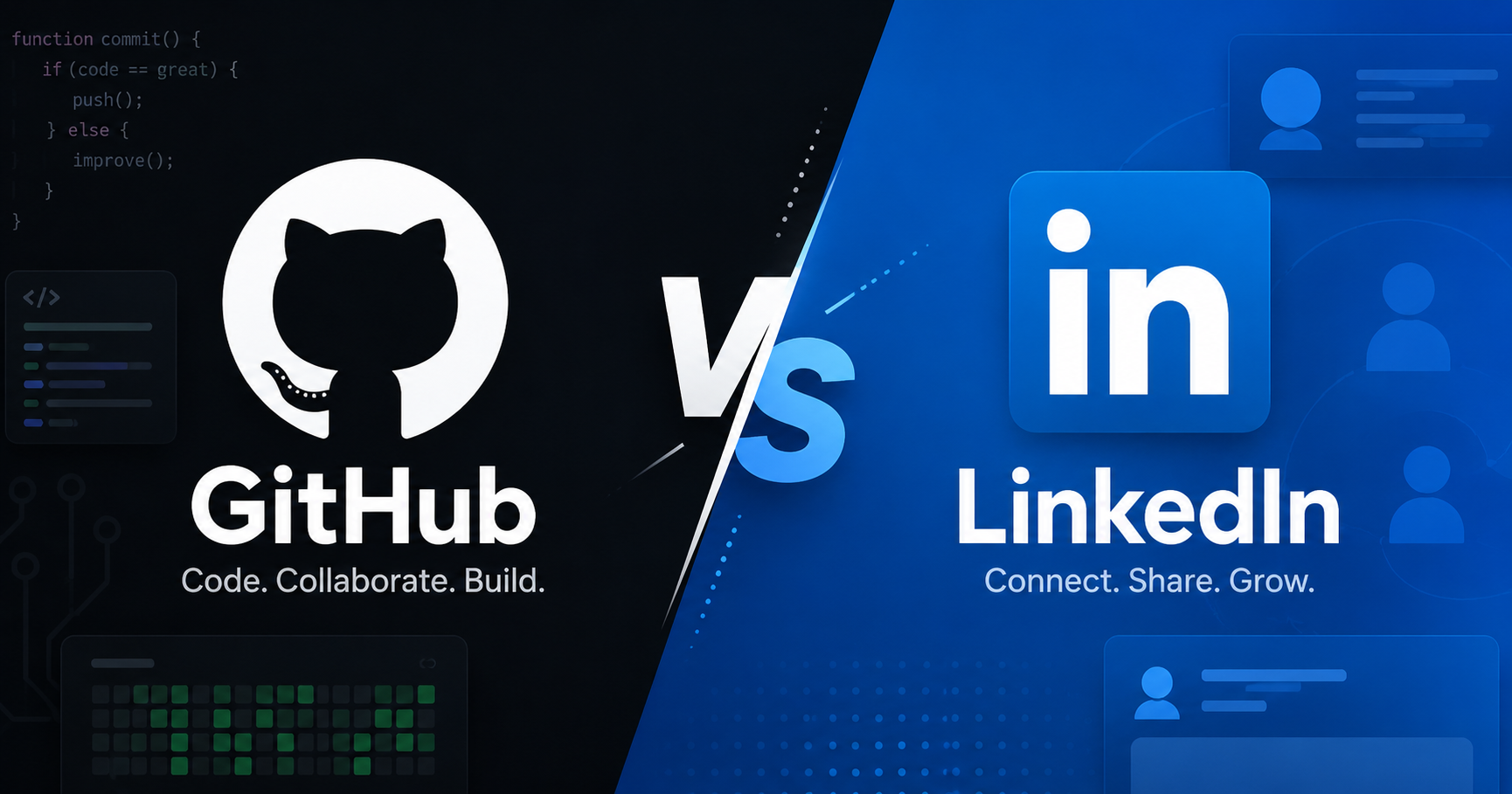
Many strong engineers rarely update LinkedIn, yet recruiters still treat it as the default talent pool. If you are looking for channels that surface public technical work, you are not alone. Strong technical candidates often show work on platforms built for building, not for polished job-seeker profiles.
The LinkedIn problem for technical hiring
LinkedIn was designed for professional networking, not for verifying whether someone can ship production software. Strong technical candidates feel that gap quickly.
Recruiter fatigue is real. Inboxes fill with generic InMails pitching roles that do not match stack, seniority, or interests. Many engineers mute or ignore LinkedIn recruiting entirely.
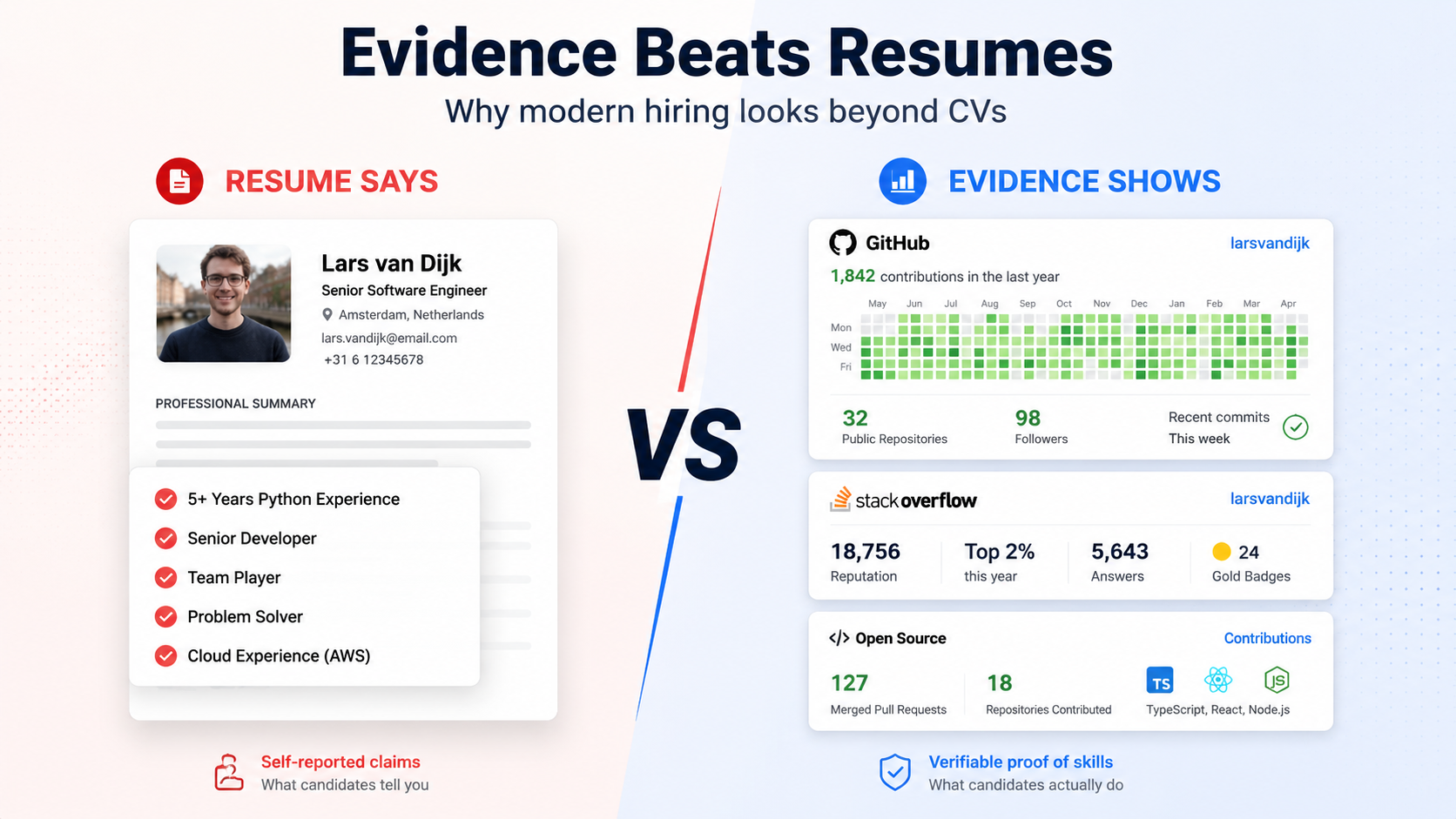
Profiles reward resume theater: keyword-stuffed headlines, endorsements that mean little, and job titles that inflate scope. A profile can claim "Senior Python Developer" without a single public repository to inspect.
Skills on LinkedIn are self-reported, not verified. There is no community score, no accepted answer, no contribution graph - only what the candidate chose to type.
For hiring teams, the pain is structural: you miss people who never optimize for LinkedIn SEO but who ship excellent open source, answer hard questions in public, and participate in technical communities daily.
Hiring managers feel it too: phone screens that sound strong on paper but collapse when asked about real tradeoffs, or candidates who cannot point to work they have shipped in public. LinkedIn rarely resolves that uncertainty because it was never built to.
When your pipeline depends on who happens to be discoverable in one network, you are optimizing for visibility, not competence. An evidence-led approach starts where work is already visible.

Where developers actually spend time
Strong technical candidates spend time on platforms where they can showcase real skills - code, answers, and technical judgment - not where they maintain a personal brand for recruiters.
GitHub - the developer portfolio
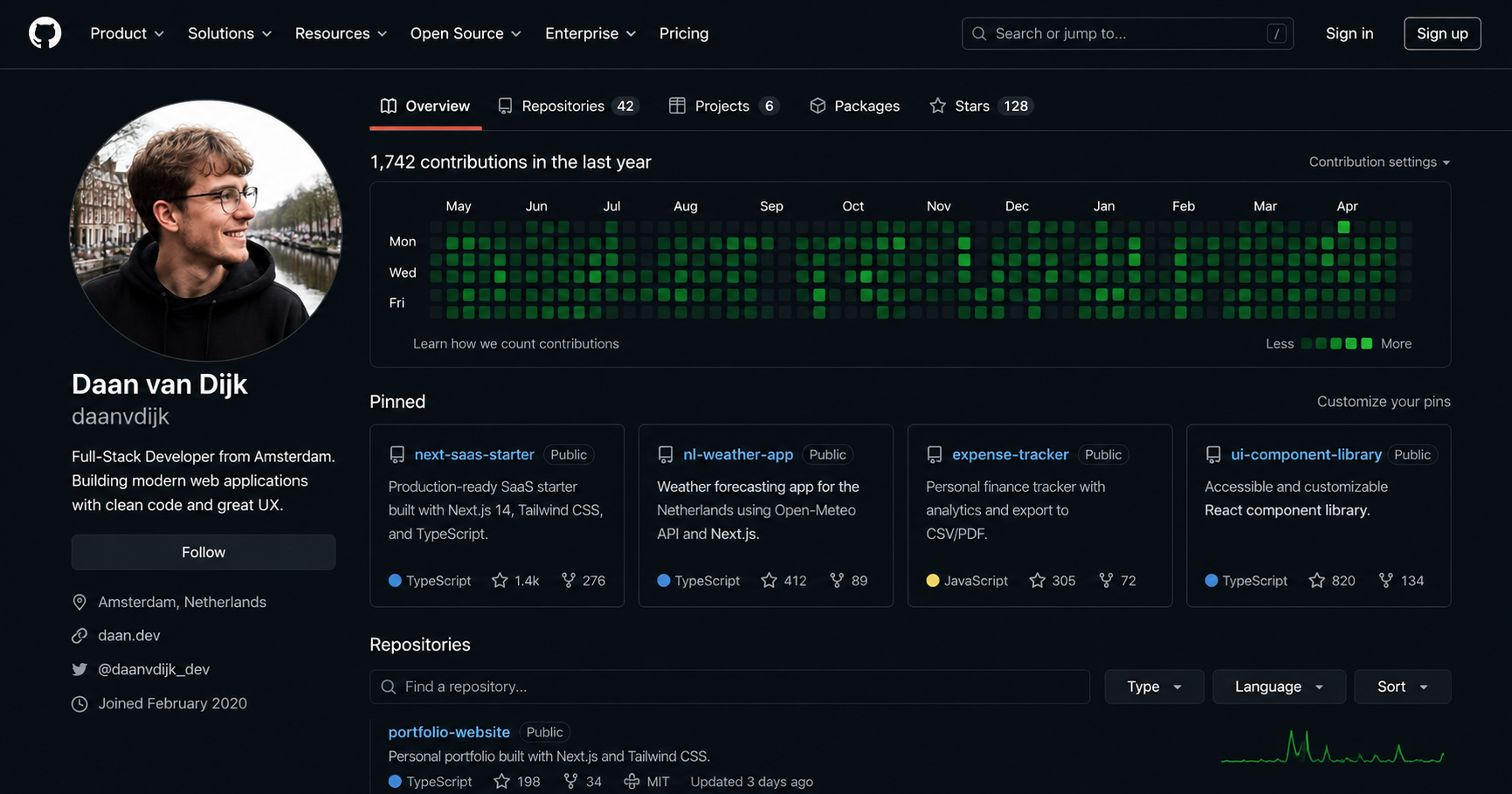
GitHub is the closest thing many engineers have to a living portfolio. Public repositories show languages in use, commit consistency, collaboration patterns, and how someone structures real projects.
Recruiters can note useful clues: maintained repos, clear READMEs, substantive issue threads, and recent relevant work. Quiet or fork-heavy profiles are incomplete evidence, not proof someone is a weak engineer. Much strong work never appears in public GitHub.
Recent, relevant public work can add context a LinkedIn headline cannot. Years of quiet or fork-only activity is incomplete evidence, not proof of weak skill. Learn how Sonar Air treats GitHub as a supported platform.
Stack Overflow - technical credibility
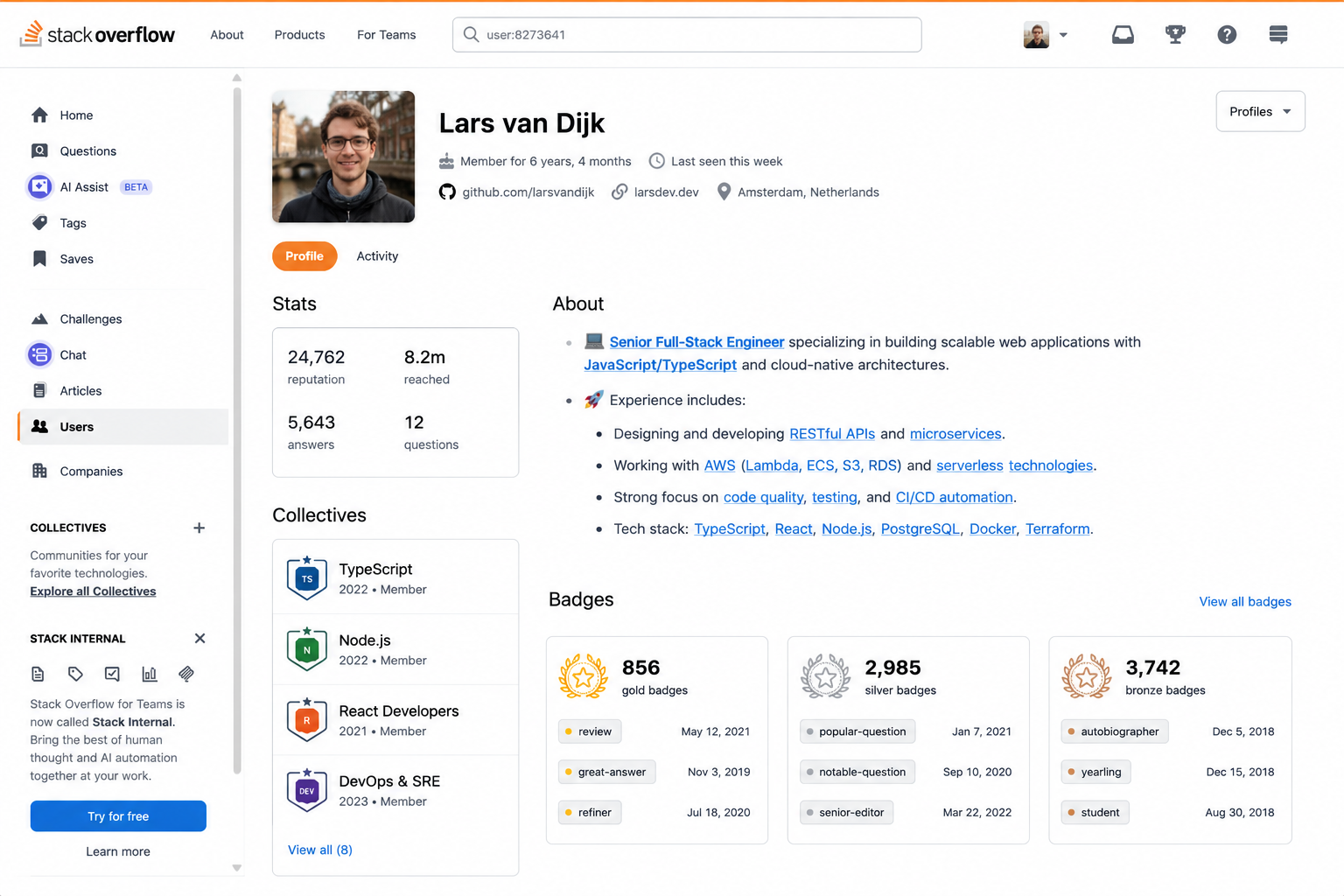
Stack Overflow surfaces problem-solving in public. Reputation reflects community-validated answers over time, not a candidate's self-assessment. Total reputation alone is not a hire score.
For niche stacks, tag-level concentration and accepted answers on hard questions can be far more signal-rich than a résumé bullet.
High tag concentration and accepted answers on hard questions can give stronger technical context than a self-reported skills list. Total reputation alone does not. See Stack Overflow in our platform overview.
Hacker News - engineering culture
Hacker News reveals what engineers read, debate, and care about. Comments and submissions show critical thinking, domain curiosity, and how someone engages with industry ideas.
Patterns over time help distinguish genuine technical interest from passive job-hopping narratives. It is a cultural signal, not a CV field.
Teams doing GitHub recruiting and forum-aware search often pair HN with code evidence. Hacker News is part of that picture.
Beyond the big three
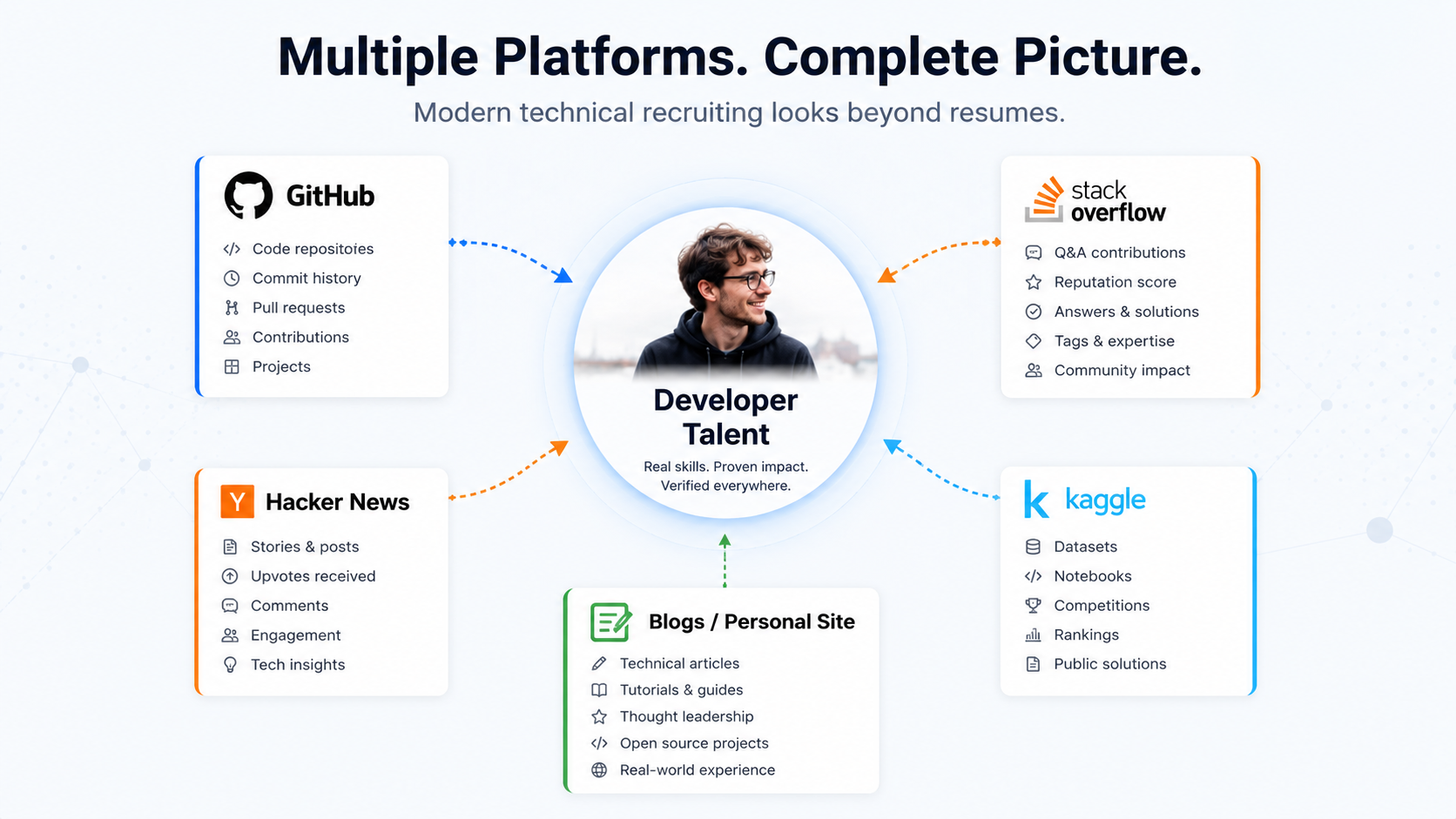
Developers are not only on GitHub, Stack Overflow, and Hacker News. Relevant developers show up in specialized venues:
- Kaggle - data science competitions, notebooks, and project history
- Technical blogs - Medium, Dev.to, and personal sites with depth on architecture and tradeoffs
- Open source - maintainers and contributors on projects your team already depends on
- Conference talks and write-ups - expertise signals that rarely map cleanly to LinkedIn fields
Multi-platform search matters because different skills appear in different places. Geography is less of a constraint when evidence is public - you are evaluating work, not a postal code.
Looking for an OpenTelemetry specialist? They might not be active on LinkedIn, but you may find them contributing to the OpenTelemetry GitHub organization or debating implementation details in technical forums.
See all supported platforms Sonar Air can draw from when you configure role profiles.
The recruiting shift
Technical recruiting is moving from résumé-first to evidence-first:
- From self-reported skills to public technical evidence
- From LinkedIn-only searches to multi-platform discovery
- From manual tab-hopping to assistive sourcing with human review
Why it matters for recruiters:
- Access to talent that looks "invisible" on job boards
- More evidence-aware context before outreach
- Less tab-hopping when signals are consolidated for review
- Managers can review public links and concrete examples instead of adjectives alone
Manual multi-platform search is painful. Checking GitHub, then Stack Overflow, then blogs for every role does not scale. It also requires enough technical context to judge what you are seeing.
Even strong recruiters lose time copying links into spreadsheets, reconciling duplicate identities across platforms, and writing bespoke outreach without a shared evidence packet. The right workflow can reduce tab-hopping across GitHub, Stack Overflow, and blogs.
Assistive tooling does not replace judgment. It can consolidate discovery steps so humans spend time on review, calibration, and conversations with the right people. That is the difference between sporadic Stack Overflow talent search and a repeatable developer sourcing workflow. See how teams approach this in practice.
How to find developers beyond LinkedIn
Practical approaches recruiters use today:
- GitHub - search by language, contribution activity, and project themes relevant to your role
- Stack Overflow - explore tags, reputation, and answer quality for stack-specific depth
- Hacker News - follow discussions where senior engineers engage substantively
- Kaggle - identify data science and ML practitioners through competitions and notebooks
- Technical blogs - search by topic to find authors who explain hard problems clearly
- Open source - map contributors on libraries your team uses
Tools help at different levels: platform-native search, RSS readers for blogs, spreadsheets to track prospects - or a unified workspace that aggregates public signals against a role profile.
Developer sourcing works best when you combine platforms: one engineer might be quiet on GitHub but prolific on Stack Overflow; another might lead through blog posts and small OSS utilities.
Sonar Air is built for that multi-signal reality - see how it searches across platforms at once while keeping recruiters in the review loop.
What this means for your hiring
Key takeaways:
- LinkedIn is not the complete technical talent pool
- Many strong technical candidates are elsewhere, showing work in public
- Evidence beats unverified resume claims
- Multi-platform discovery can help build more evidence-aware shortlists for review
- The right workflow can reduce tab-hopping across GitHub, Stack Overflow, and blogs
Hiring implications:
- Audit where your pipeline actually comes from today
- Add GitHub, Stack Overflow, and community sources to your playbook
- Use public technical work as additional context, not as proof of skill
- Cast a wider net across platforms for niche roles
- Use tooling to scale search without losing human judgment
Next steps: map one open role to public signals you would treat as useful context, then run a pilot shortlist from non-LinkedIn sources. Public evidence is incomplete, and a quiet footprint does not mean someone lacks skill. Start with one platform you already trust - often GitHub for backend roles or Stack Overflow for product engineering - and expand only after your team agrees on what useful evidence looks like.
When you are ready to scale, align recruiters and hiring managers on a shared rubric: languages, ownership signals, recency, and negative filters. That keeps technical recruiting consistent even when candidates arrive from different communities.
See how modern sourcing works end to end, and read the FAQ for setup and plan questions.
Conclusion
Strong technical candidates are often quiet on LinkedIn because they optimize for building, not profile SEO. They leave public work on GitHub, Stack Overflow, Hacker News, Kaggle, and technical blogs. Start with evidence, keep recruiters in the review loop, and treat LinkedIn as one complementary channel among several.
Vitalijs Mark
Writes about evidence-based technical recruiting and multi-platform developer sourcing at Sonar Air.
About Sonar AirMore from the blog
More articles on technical hiring are coming soon.
Back to blog